Senegal Retro Sunset Map: A Designer's Stitch Review
When I first pulled up the Senegal Retro Sunset Map on my screen, I wasn't just looking at a graphic; I was immediately visualizing the texture of thread against fabric. As someone who spends half their life digitizing and the other half stitching out files for clients, I have a specific set of criteria before I commit a design to a real project. This isn't about whether an image looks good on a website; it's about whether it survives the needle, the hoop, and the washing machine. This particular piece, categorized under Logos and Graphics, carries a distinct vintage vibe that translates surprisingly well into the medium of machine embroidery, provided you approach it with the right strategy.
The Visual Mood and Layout Analysis
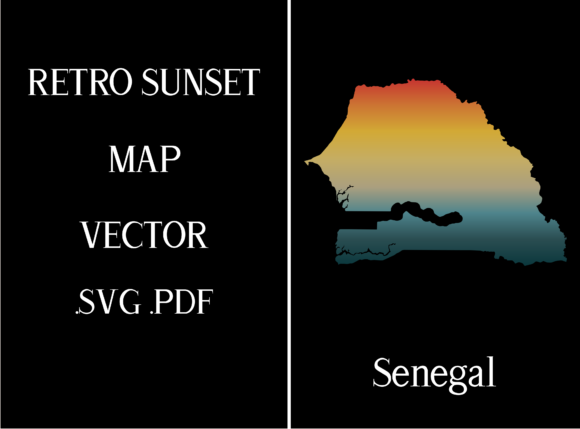
The first thing that strikes me about the Senegal Retro Sunset Map is its atmospheric quality. The retro aesthetic relies heavily on gradient-like transitions and bold silhouettes, which can be tricky in embroidery where we don't have true pixels, only stitches. The layout features the recognizable outline of Senegal, likely overlaid with stylized sun rays or horizon lines typical of that 70s and 80s sunset motif. For an embroidery project, this shape offers a fantastic balance between negative space and filled areas.
In terms of visual personality, it feels warm, nostalgic, and travel-inspired. It's not a stiff corporate logo; it has soul. This makes it an ideal candidate for lifestyle products rather than rigid uniform branding. The curves of the coastline and the radiating lines of the sunset suggest a mix of fill stitch for the larger color blocks and potentially satin stitch for the defining borders. If the file utilizes running stitch for fine details, those will need careful monitoring during the stitch-out to ensure they don't get lost on textured fabrics.
Real-World Application: The Boutique Tote Scenario
To truly test the viability of this design, I imagined a specific real-life scenario: a custom order for a local boutique selling eco-friendly travel gear. The client wanted a limited run of canvas tote bag designs featuring African heritage themes. The Senegal Retro Sunset Map was the perfect fit. On a natural cotton canvas, the retro colors would pop without looking garish.
However, executing this required foresight. Canvas has a weave that can swallow small details. If this embroidery file has dense stitch areas in the sunset gradients, there is a risk of the fabric puckering if the stitch density is too high. In my mental walkthrough of this project, I would pair this design with a cut-away stabilizer to support the weight of the thread, ensuring the map retains its shape after being stuffed with groceries or beach gear. The result would be a handmade product that feels premium and intentional, elevating a simple bag into a statement piece.
Versatility Across Custom Apparel and Home Goods
Beyond tote bags, this design shines in the realm of custom apparel. Imagine this stitched onto the left chest of a heavyweight crewneck sweatshirt. The sweatshirt embroidery market is huge right now, and customers are looking for unique graphics that aren't just screen-printed transfers. The retro style of the Senegal Retro Sunset Map complements the cozy, vintage feel of fleece perfectly.
It also works beautifully for holiday embroidery or personalized gifts. For a customer with roots in Senegal, this could be the centerpiece of a pillow cover or a wall hanging. The geometric nature of the map allows it to scale reasonably well, meaning it could work as a large back-piece on a jacket or a smaller accent on a baby embroidery project, like a onesie or a nursery blanket. However, scaling down requires caution. If the design includes tiny text or very thin lines representing the sun's rays, those might vanish if reduced below a certain hoop size.
Technical Considerations and Fabric Challenges
While the aesthetic is strong, a professional reviewer must address the technical hurdles. The "retro" look often implies color blending. In embroidery, we achieve this through layering or specific digitizing techniques. If the Senegal Retro Sunset Map relies on many thread color changes to create the sunset effect, it increases production time and the risk of thread breaks. For a craft business owner, time is money. You need to know if the thread colors transition smoothly or if there are abrupt jumps that look jagged.
Fabric choice is critical here. On dark fabric, the lighter tones of the sunset need sufficient coverage. If the digitizing is too sparse, the dark background will show through, ruining the retro gradient effect. Conversely, on stretchy fabrics like jersey knits, the density of the map outline must be balanced with enough pull compensation to prevent distortion. Curved surfaces, such as caps, present another challenge. The flat geometry of a map can look warped if stitched on a structured cap without proper hooping techniques and backing.
Maximizing Value and Professionalism
Using a well-chosen design like this directly impacts your brand consistency and customer trust. When an Etsy seller or small shop owner delivers a finished product with crisp, clean stitching, it validates the price point. The Senegal Retro Sunset Map has a professional look that avoids the amateurish feel of poorly converted clipart. It signals to the buyer that thought went into the creation.
For those creating printable mockups or digital previews, this graphic holds its own visually even before a single stitch is made. It helps in marketing the potential of the item. Whether you are selling design assets or physical goods, the recognition factor of a well-executed map design can drive engagement. It tells a story of place and style, which is powerful for commercial embroidery projects aimed at travelers or cultural enthusiasts.
Final Designer Notes and Best Practices
Before you commit to stitching the Senegal Retro Sunset Map for a client or adding it to your inventory, here is my practical advice:
- Test on Scrap First: Always stitch a sample on the exact fabric type you intend to use. Check how the fabric texture interacts with the fill stitches.
- Check Contrast: View the design in black and white on your screen. If the different elements of the map blend into a gray blob, you may need to adjust thread choices or the design itself.
- Review Density: Look closely at the sunset areas. If they feel too heavy, consider editing the file to reduce stitch count if your software allows, or switch to a lighter stabilizer.
- Verify Licensing: Since this falls under Graphics and Logos, confirm the license terms. Ensure you are cleared for commercial embroidery if you plan to sell finished items.
- Inspect Small Details: Zoom in on the corners of the map and the tips of the sun rays. These are the first places to fray or bunch up if the digitizing isn't sharp.
- Consider the Hoop: Ensure your machine's hoop size can accommodate the full width of the map without needing to re-hoop, which can cause alignment issues.
The Senegal Retro Sunset Map is a compelling choice for modern makers. It bridges the gap between digital art and tactile craft. With the right preparation regarding stabilizers, fabric selection, and thread management, it can become a staple in your portfolio of personalized gifts and boutique merchandise. It's not just a picture of a country; it's a design element that, when stitched with care, adds significant value to any textile surface.